
Cold WhatsApp Marketing: A Complete Guide for Businesses
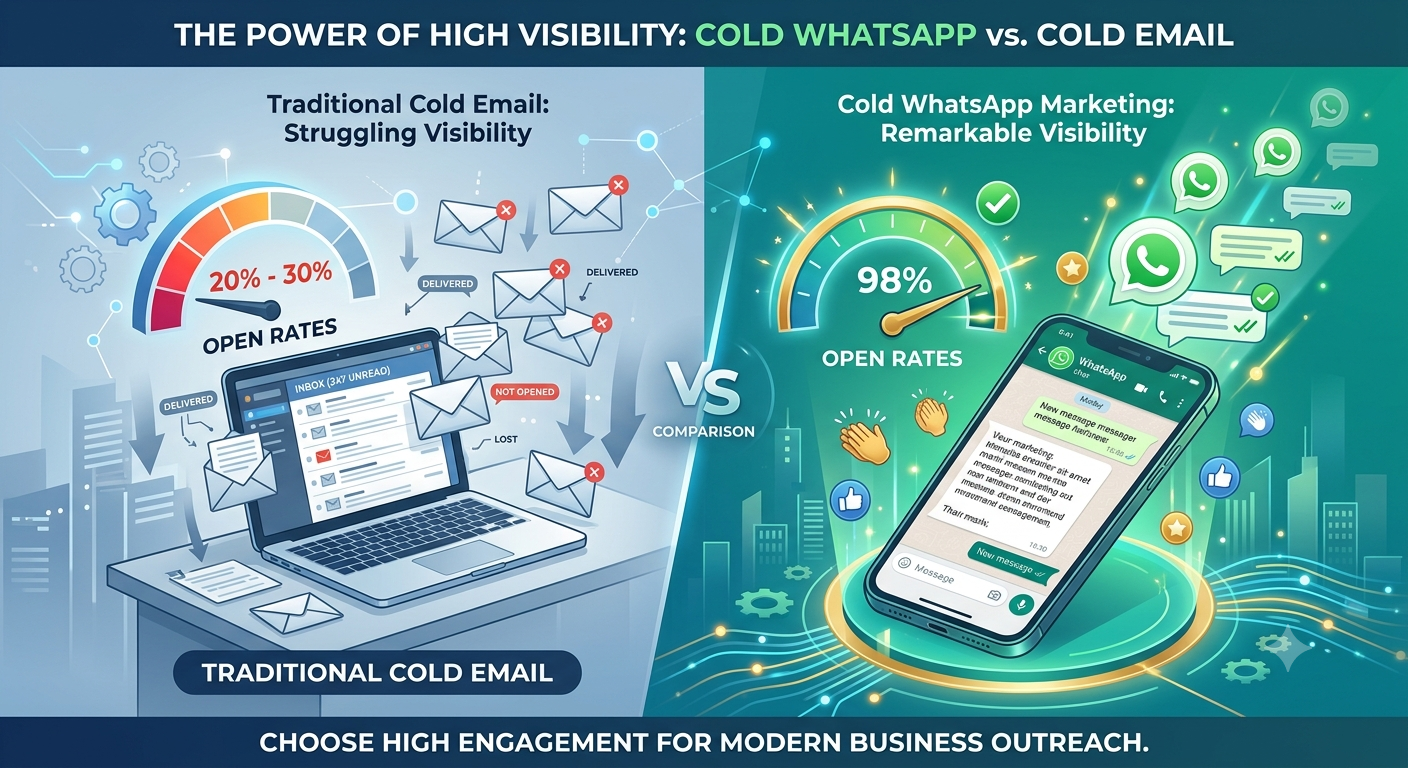
Cold WhatsApp marketing is rapidly emerging as one of the most effective outreach channels available to modern businesses. While traditional cold email campaigns frequently struggle with open rates hovering around twenty to thirty percent, WhatsApp messages achieve remarkable visibility with open rates consistently reaching ninety-eight percent.
This comprehensive guide explores everything businesses need to know about cold WhatsApp marketing, from fundamental concepts to advanced implementation strategies. You will discover what cold WhatsApp marketing truly means, how it differs from warm outreach, when it delivers the best results, and the proven techniques successful businesses use to engage potential customers.
Understanding Cold WhatsApp Marketing
Cold WhatsApp marketing refers to the practice of contacting potential customers through WhatsApp without any prior relationship or conversation history. It operates similarly to cold calling or cold emailing, but leverages a messaging platform that people check constantly throughout their day. The critical difference lies in the personal nature of WhatsApp as a communication channel.
The distinction between truly cold outreach and warm lead nurturing matters significantly for campaign success. True cold outreach means contacting someone who has never interacted with your business in any capacity. However, much of what businesses label as cold WhatsApp marketing actually involves re-engaging past customers, following up on website inquiries, or connecting with event attendees.
Businesses are increasingly shifting their outreach efforts to WhatsApp because the performance metrics are compelling. Research indicates that WhatsApp marketing drives eighty-nine percent more sales per user compared to email marketing. When your message actually gets read and noticed, conversion opportunities multiply significantly. The platform's ubiquity with over two billion active users globally makes it an essential channel.
Technical Approaches to WhatsApp Marketing
Understanding the technical distinction between WhatsApp Business API and WhatsApp Web-based tools is essential for choosing the right approach. The official WhatsApp Business API requires Meta approval, uses template messaging formats, and charges per-message fees. WhatsApp Web-based tools work through your browser, integrate with spreadsheets, and do not require complex API setup procedures.
For small and medium-sized businesses, WhatsApp Web-based solutions often prove more practical and cost-effective. These tools allow you to manage contacts directly from spreadsheets like Google Sheets or Excel, personalize messages using data columns, and send campaigns without importing thousands of contacts to your phone. The simplicity and lower cost structure make this approach ideal for businesses testing WhatsApp marketing.
Why WhatsApp Outperforms Traditional Channels
The performance gap between WhatsApp and traditional outreach channels is substantial and measurable. Email marketing typically achieves open rates between twenty and thirty percent, while WhatsApp messages consistently reach ninety-eight percent open rates. Cold calling averages response rates around two to five percent, whereas WhatsApp outreach generates ten to twenty percent response rates when executed properly.
The advantages extend far beyond simple statistics. WhatsApp messages appear directly on someone's phone screen as notifications, creating immediate visibility. There is no spam folder hiding your message from view. You can send rich media including images, videos, documents, and voice notes to communicate your value proposition effectively. Most importantly, WhatsApp creates genuine two-way conversations rather than one-directional broadcasts.
Sales professionals consistently report higher engagement through WhatsApp compared to traditional channels. The platform feels personal rather than promotional, which fundamentally changes how recipients perceive and respond to business messages. Research indicates that conversational commerce through messaging apps is becoming a strategic priority for customer engagement, with personalized outreach improving conversion rates by ten to fifteen percent.
Proven Strategies for WhatsApp Outreach Success
Successful WhatsApp outreach is not about sending messages to thousands of random contacts. It requires targeted, personalized communication delivered at the right moment. The most effective strategy for most businesses involves starting with warm WhatsApp outreach to contacts who already know your brand, then gradually expanding toward colder prospecting as your messaging skills improve and you understand what resonates.
Re-engaging Dormant Customers
Your dormant customer list represents the lowest-hanging fruit for WhatsApp marketing campaigns. These individuals already know your brand, have purchased from you previously, and simply need a gentle reminder to return. A personalized message acknowledging the past relationship and offering relevant new value can revive customer relationships that seemed completely inactive. Research shows acquiring new customers costs five to twenty-five times more than retaining existing ones.
Following Up on Website Inquiries
When someone visits your website, downloads content, or fills out a contact form, response speed dramatically impacts conversion rates. Following up via WhatsApp within hours while their interest remains fresh can increase conversion likelihood by twenty-one times compared to waiting thirty minutes or longer. The key is providing immediate value and helpful information rather than aggressively pushing for an immediate sale.
Lead Qualification Before Sales Calls
Using WhatsApp to qualify interest before scheduling sales calls saves your team countless hours of unproductive conversations. A quick message exchange can determine budget availability, purchase timeline, and specific needs. One solar equipment dealer sent a simple qualification message to twenty-five hundred contacts and received nearly four hundred seventy positive responses, creating a hot lead list instead of requiring the sales team to cold call everyone.
Post-event engagement works exceptionally well when memory is fresh in attendees' minds. Sending a WhatsApp message with event recordings, presentation slides, or additional resources while participants still remember your presentation keeps the conversation momentum going. It feels more immediate than email and more personal than automated follow-up sequences, creating genuine connection opportunities with interested prospects.
Crafting Effective WhatsApp Messages
The best WhatsApp messages follow a proven formula: keep them short, make them personal, provide genuine value, and include a soft call to action. Successful messages typically consist of two to three sentences maximum. They acknowledge the recipient by name, reference their specific situation or interest, and offer something helpful rather than immediately requesting a purchase or commitment. This approach respects the personal nature of WhatsApp.
Personalization significantly improves engagement rates across all WhatsApp campaigns. Using the recipient's name, referencing their specific interest or past interaction, or mentioning a mutual connection dramatically increases response likelihood. Generic copy-pasted messages feel like spam and get ignored or reported. Even simple personalization using spreadsheet data makes messages feel legitimate and worth responding to, which protects your account and improves results.
Staying Safe and Avoiding Account Bans
WhatsApp actively monitors for spam behavior and can ban accounts quickly if you violate their policies or user expectations. Staying safe while scaling your outreach requires following specific best practices. Start with low daily volumes between fifty and two hundred fifty messages for new accounts. Gradually increase volume as you establish a pattern of legitimate communication. WhatsApp's algorithms specifically look for sudden spikes in messaging activity.
Using random time gaps between messages helps your activity appear natural rather than automated. Sending one hundred messages in ten minutes is an obvious red flag. Tools with built-in anti-ban features automatically space out your messages to mimic human behavior. Always respect business hours and send messages when recipients are likely working in their timezone. Nobody appreciates receiving sales pitches late at night or early in the morning.